
Fluctuating revenue can derail loan plans, yet specialized simulators give you precise payment projections before any paperwork.
Plugging real income ranges into these tools shows monthly obligations, highlights hidden fees, and safeguards your slow-season budget. By confirming affordability upfront, you approach lenders with data that proves stability and justifies better terms.



Specialized Simulators Matter for Independent Earners
Fluctuating income streams complicate loan applications, yet modern web tools and freelancer-friendly platforms allow you to preview exact costs before sending any documentation.
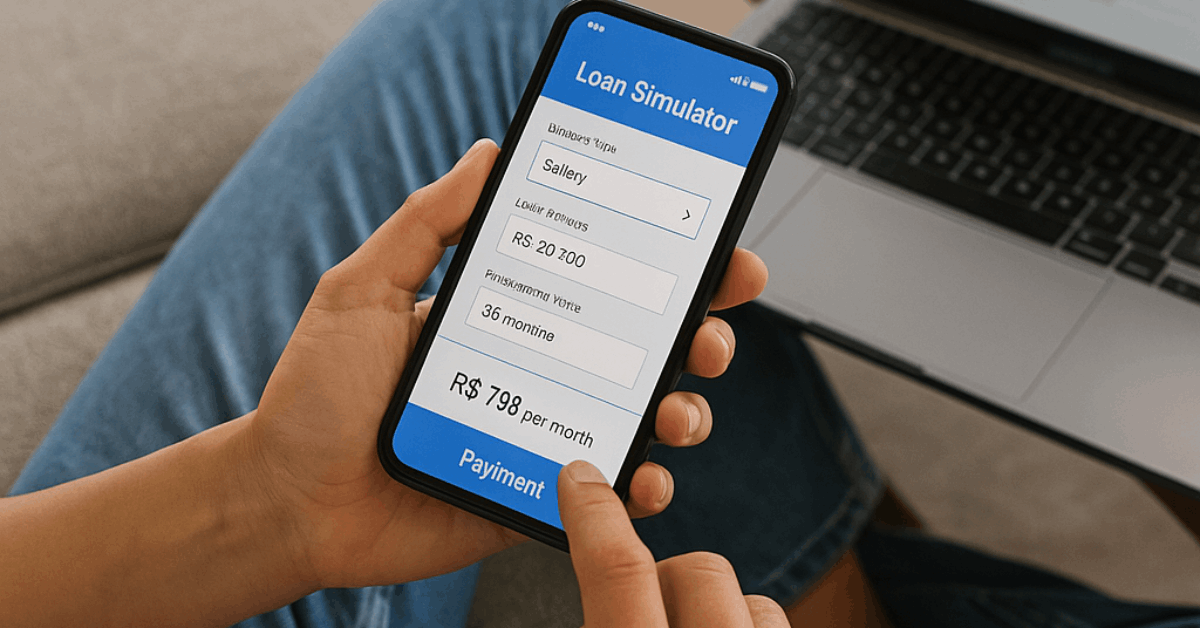
Accurate simulations replace guesswork, protect cash flow during slow months, and strengthen your negotiating position when lenders request additional proof of stability.
Prepare Key Data Before Running Your First Simulation
Solid inputs guarantee meaningful outputs, so gather every figure a calculator might request.
- Average monthly revenue and lowest historical month, lenders often use the weaker value to test affordability.
- Most recent tax return or profit-and-loss statement, these numbers determine maximum loan size.
- Desired loan purpose and amount, matching need to sum helps avoid expensive over-borrowing.
- Preferred repayment term expressed in months, common ranges stretch between twelve and sixty.
- Quoted annual percentage rate (APR) from at least three providers so you can compare scenarios.
- Estimated processing fees and insurance costs because simulators that ignore ancillary charges understate the real obligation.
Input consistency across calculators ensures you are comparing like for like when finalizing a platform.
Reliable Online Calculators Freelancers Can Use Immediately
Direct-to-consumer simulators save time and rarely ask for sensitive data. Test two or three from the following list to confirm numbers line up.
| Tool | Core Strength | Additional Perks | Cost |
| Upstart Monthly Payment Estimator | Considers education and skills alongside credit history | Displays variable APR range based on personal profile | Free |
| Lendio Loan Comparison Widget | Pulls offers from 75+ partner lenders after one form | Sends side-by-side term sheets via email within minutes | Free |
| PayPal Working Capital Calculator | Uses PayPal sales history, not credit score, to define limits | Shows repayment as a percentage of future transactions | Free for account holders |
| Fundbox Advance Simulator | Projects weekly repayment on financed invoices | Integrates directly with major accounting software | Free |
| SoFi Personal Loan Tool | Includes unemployment protection feature in the quote | Highlights membership perks such as career coaching | Free |
| IndusInd Bank EMI Calculator | Designed for Indian self-employed borrowers | Supports tenures up to forty-eight months | Free |
Most calculators request loan amount, term, and indicative APR, then return the monthly installment and total repayable figure. Keep screenshots for later reference.
Step-by-Step Workflow for Accurate Loan Simulations
This sequence minimizes entry errors and reveals hidden expenses early.
- Choose two calculators relevant to your geography and loan purpose, then open them in separate browser tabs.
- Enter identical figures for amount, term, and APR, adding processing fees where the field exists.
- Activate advanced options such as bi-weekly repayment or payment-holiday toggles if the tool provides them.
- Export or note the amortization schedule including interest and principal breakdown for every period.
- Repeat the exercise after adjusting one variable—for example, increase the down payment or shorten the term—to gauge sensitivity.
- Compare outputs across tools; discrepancies larger than two percent often indicate missing fees in one simulator.
- Add projected insurance premiums and platform subscription costs to the monthly figure to reach a realistic cash-flow requirement.
- Verify that the highest combined payment fits within your lowest historical income month; if not, rework variables until it does.
Following these eight actions equips you with a payment plan resilient to seasonal income dips.
Loan Platforms Tailored to Freelancers and How to Simulate Each One
Competing platforms tout flashy terms, which means comparing their simulators side by side is the fastest path to a stress-free borrowing choice.
Upstart
Upstart’s internal calculator weighs education credentials, professional certifications, and credit behavior alongside raw income.
Enter your requested amount, indicate freelance status, and supply estimated annual earnings.
The simulator outputs a probable APR and a fixed monthly installment. Examine the total interest line; extending the term by twelve months increases overall cost sharply even if the installment drops slightly.
Lendio
After one detailed form, including industry, average invoice size, and years in business, you receive a dashboard containing prequalified offers.
Lendio’s embedded simulator lets you slide term and amount bars for each offer while instantly updating the estimated payment, funding speed, and fee schedule. Save PDFs for later side-by-side evaluation.
PayPal Working Capital
Log in to your PayPal merchant account, access the working capital section, and the tool auto-populates eligible loan size based on trailing twelve-month revenue.
Select a repayment percentage; the simulator estimates daily deductions from future sales and predicts payoff time given historical volume. This model removes fixed dates, making it perfect for freelancers with uneven income.
Fundbox
Connect your accounting app or manually upload outstanding invoices. Choose which invoices to advance, then review the weekly repayment and total fee shown on the simulator slide-out.
Because Fundbox charges flat fees instead of traditional interest, compare the effective APR to other options before committing.
SoFi
Input amount and term on SoFi’s web calculator; the system immediately displays potential fixed rates including autopay discounts.
Note the additional value: access to financial planners and networking events stretching beyond pure funding. Simulate best- and worst-case cash-flow months by toggling term options until both fit your budget.

Criteria for Selecting the Optimal Platform After Simulation
Use the checklist below to rank offers realistically rather than purely on headline rates.
- Approval likelihood given freelance income verification, platforms accepting invoices or PayPal statements typically outscore those demanding corporate tax returns.
- True annual cost after fees, incorporates origination, processing, and accelerated-repayment penalties into the APR for apples-to-apples comparison.
- Repayment flexibility, sales-percentage models or payment-holiday features ease stress during lean months.
- Funding speed, urgent equipment repairs favor providers disbursing within twenty-four hours.
- Ancillary support, credit-building reporting, business coaching, or integrated bookkeeping reduce long-term friction.
Rank each platform from one to five on these attributes, then choose the option with the highest total score that still meets budget constraints.
Eligibility Essentials Freelancers Commonly Overlook
Avoid last-minute rejections by confirming these lender requirements upfront.
- Minimum personal credit score often starts around 600, though Upstart may approve lower when academic data excels.
- Verified annual revenue threshold, typically USD 25,000 or local equivalent, documented through tax returns or payment-processor statements.
- At least six to twelve months of continuous freelance activity; newer contractors may need a co-signer or smaller advance.
- Valid government identification plus proof of residence.
- Business bank account matching the applicant’s name for direct disbursement.
Keep digital copies ready so the approval pipeline moves without delays.
Strategies to Strengthen Approval Odds After Simulation
Income volatility does not doom your application; targeted actions improve confidence.
- Consolidate client payments through one platform for three months to produce a clear deposit trail.
- Lower existing revolving balances to raise your credit utilization ratio two weeks before applying.
- Add an explanatory cover letter outlining predictable retainer contracts or upcoming projects.
- Secure signed client letters of intent when negotiating large future jobs and attach them as supporting documents.
- Use a smaller starter loan from PayPal or Fundbox, repay on schedule, then leverage improved history for larger sums later.
Each tactic reduces perceived risk and frequently qualifies you for better rates.
Simulation Mistakes and How to Avoid Them
Using optimistic revenue numbers inflates apparent affordability; always input conservative income based on your weakest quarter. Ignoring fee structures such as origination or late-payment charges skews total-cost comparisons; enter every known fee into custom fields or manual spreadsheets.
Relying on one simulator creates blind spots; cross-check at least two to validate outputs. Forgetting currency conversion when borrowing from international platforms can add hidden costs; use local currency calculators or include exchange-rate buffers.
Double-checking calculations with these pitfalls in mind saves you from painful surprises post-disbursement.
Conclusion
Freelance life rewards initiative, yet financing decisions require calm analysis rather than impulse. Online simulators translate opaque loan jargon into clear monthly numbers you can test against realistic income scenarios.
Combine multiple calculators, verify all fees, and prioritize repayment flexibility to protect your business during slow cycles.
Approached this way, borrowing becomes a strategic tool that funds growth, stabilizes cash flow, and keeps your creative work thriving—without compromising future financial health.