
You can apply for student transportation aid in Brazil through two main channels.
At the federal level, the Ministry of Education funds school transport for basic-education students in rural (and some riverine) areas.


In cities and metropolitan regions, fare discounts or free student passes are run by local transport authorities.
The Two Pillars: Federal School Transport vs. Local Student Passes
Understanding which channel serves you—rural school transport or an urban student pass—is the first step to applying correctly.
PNATE
The National School Transport Support Program (PNATE) transfers resources automatically to states, the Federal District, and municipalities.
They cover the ongoing costs of public school transport, including maintenance, fuel, insurance, licensing, and contracted services.
The aid is supplementary and focuses on public basic-education students who live in rural areas.
Caminho da Escola
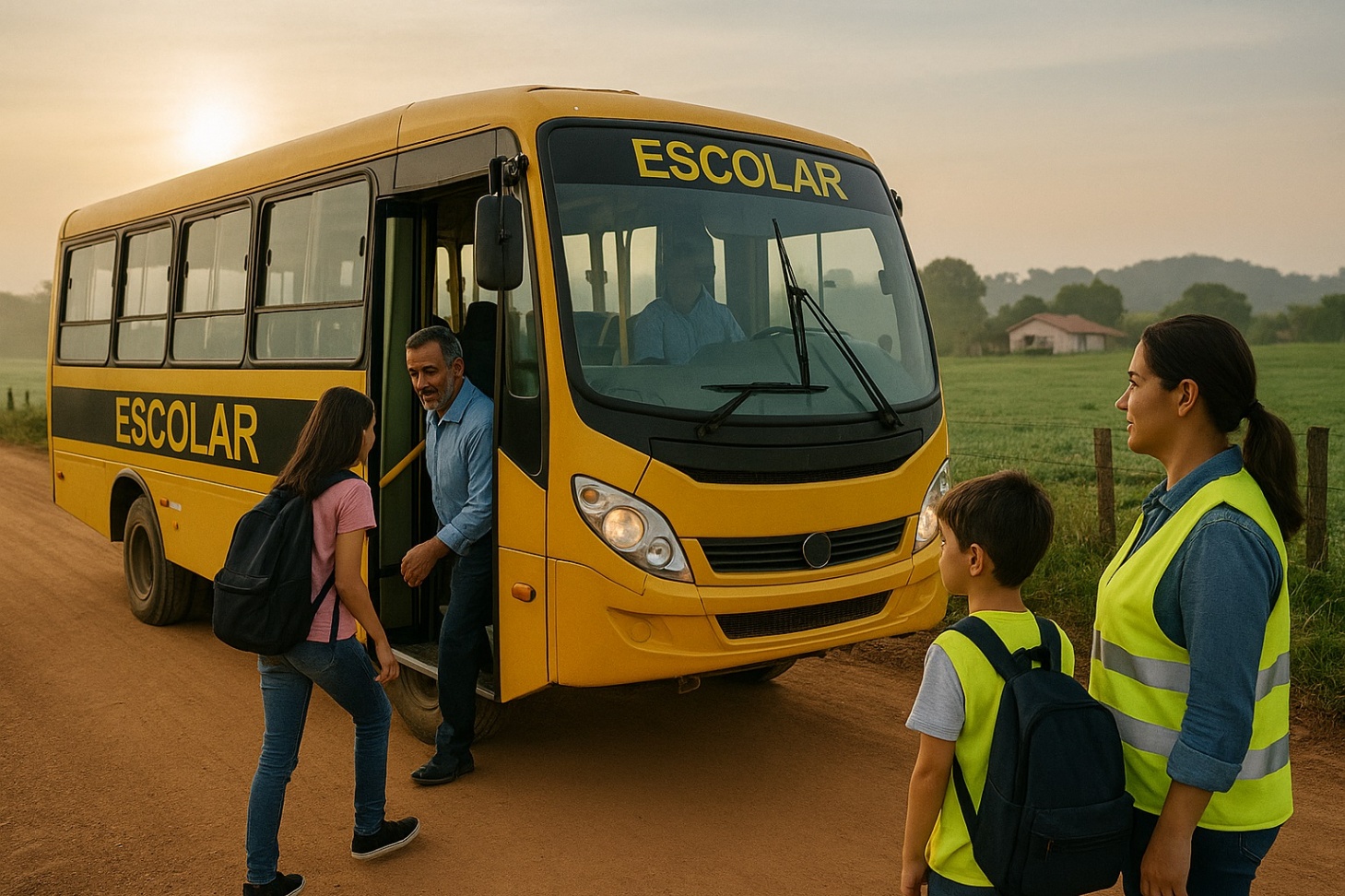
In parallel, Caminho da Escola equips school transport fleets with buses, boats, and bicycles built to federal standards.
They are purchased by states and municipalities through a national price registry.
Individual students do not apply for these programs; local governments organize routes with federal support.
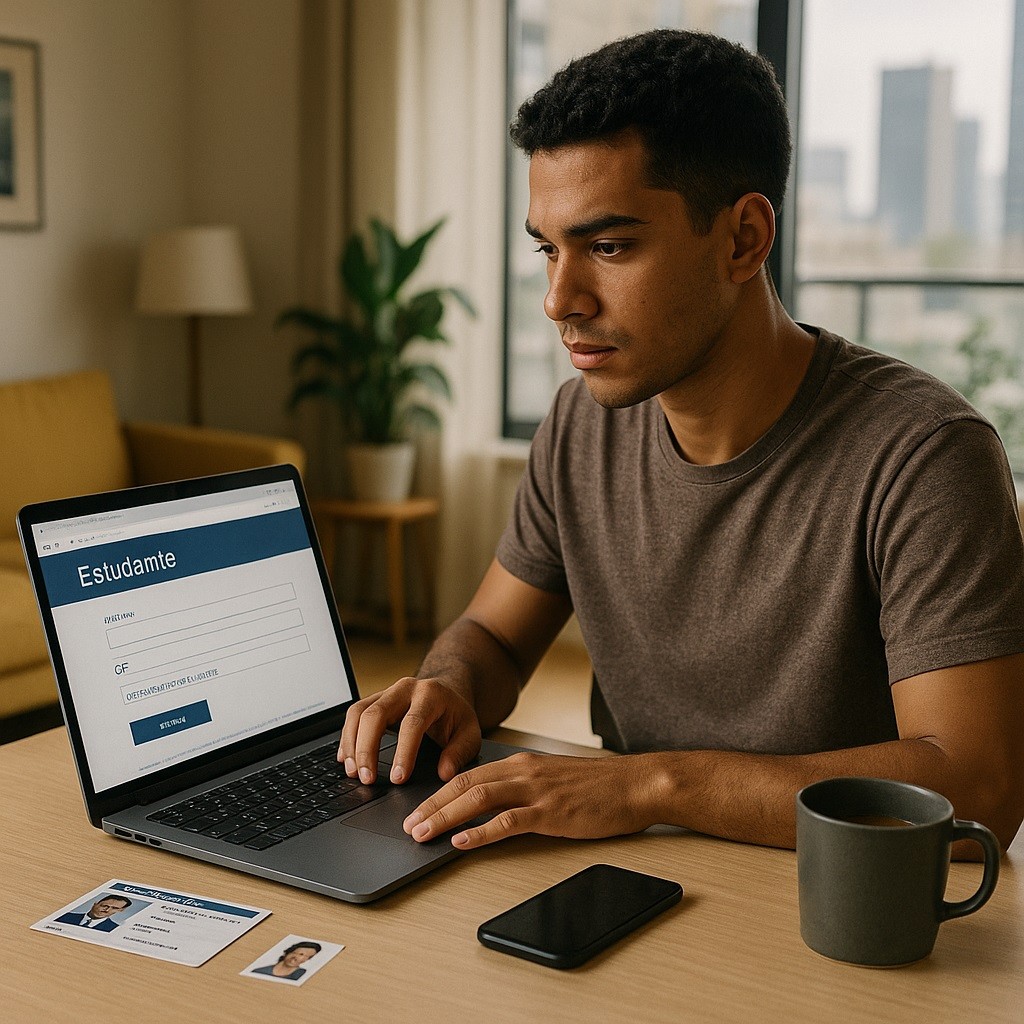
Bilhete Único Estudante (SPTrans)
In São Paulo, SPTrans manages the Bilhete Único de Estudante for students in fundamental, secondary, technical/vocational, and higher education.
The process starts with the school: it must transmit your enrollment data to SPTrans; after that, you can submit your request online and track it.
Rules of use apply, and the authority publishes fees for issuance/revalidation and delivery times for each academic year.
Who can apply and basic conditions
Your school must confirm your enrollment by sending student data to SPTrans.
As a rule of thumb, the institution needs to be a reasonable distance from your residence (commonly at least 1 km) and connected by public transport.
Residents in the capital attending courses in the Greater São Paulo area (and vice-versa) are covered, with specific intercity use cases detailed by SPTrans.
How to request
Tell your school you intend to use the student pass so it sends your enrollment data to SPTrans.
Once the upload is processed—usually within a few business days—you can submit your request in the SPTrans portal and follow the status online.
Fees and card delivery
The authority defines an annual charge for first issuance or revalidation and indicates whether your existing card can be revalidated without printing a new one.
For new cards, delivery typically occurs to the registered address within the published time frame after payment and approval.
Replacement and second-copy rules are also available on the official page.
Renew every year
The student pass is tied to the academic year; you must revalidate it annually.
Coordinate with your school early, since the system depends on updated enrollment data.
Passe Livre Estudantil (BRB Mobilidade)
In the Federal District, the Passe Livre Estudantil (PLE) grants free access to public transport for eligible students, operated through BRB Mobilidade.
Registration is digital and covers first-time applications, second copies, access extensions, and institution changes.
Official DF portals and agencies publish the operating rules, service menus, and contact channels.
Documents commonly requested
Typical items include a recent 3×4 photo, ID (RG or birth certificate), CPF, recent proof of residence, and an updated school declaration.
After obtaining the declaration, you register on the BRB Mobilidade platform or at a designated service post.
Because requirements may change, check the current list before submitting.
Second copy and updates
If your card is lost, stolen, or damaged, there is a defined process for issuing a second copy and a modest fee.
When changing institutions, you must upload a new school declaration in the platform to keep the benefit active.
The BRB Mobilidade app and website provide a “2ª via” flow and guidance for updates.
Rural Area and Attend a Public Basic-Education School
Students in rural areas are primarily served by school transport organized by their municipality or state with PNATE support.
PNATE funds cover expenses such as maintenance, fuel, insurance, and licensing, and may support contracted third-party services when necessary.
You do not apply for PNATE as an individual.
Instead, coordinate with your school and local education department so your name and route needs appear in the transport planning for your locality.
Complement
States often complement federal support with their own rules, including minimum distances from home to school and exceptions for safety or mobility issues.
Operations usually blend federal (PNATE), state, and municipal resources.
Because regulations vary, consult your state education department for the current rulebook and any additional forms that might apply.
How to Apply For Student Transportation Aid (Urban Student Pass)
Although wording varies by city, the flow is similar to São Paulo and the Federal District.
- Confirm eligibility and your local portal. Identify your city’s transport authority (for example, SPTrans in São Paulo or BRB Mobilidade/SEMOB in the DF) and read the section for students to understand rules, documents, and fees.
- Ask your school to upload your enrollment. Many systems require your institution to send your data first; only then will your request appear for submission.
- Prepare documents. Expect ID, CPF, proof of residence, a recent student declaration, and a 3×4 photo. Upload them exactly as instructed to avoid rework.
- Submit your request and track it online. Use the portal’s “acompanhar cadastro/pedido” function to watch for clarifications or corrections.
- Pay issuance or revalidation fees if applicable. Some cities charge an annual fee; others issue cards without cost. Confirm the current amount and payment method.
- Receive, unlock, and use. When approved, cards are delivered or collected and may require activation or unlocking before loading credits (in discount models).
- Renew every academic year. Most systems require revalidation tied to the school calendar. Set a reminder to update documents when your school issues the new declaration.
Frequently Asked Questions
Is there a national “cash” scholarship for transport?
- No. Federal support for transport is operational rather than a per-student stipend. PNATE funds go to states and municipalities to run and maintain school transport for rural students; families do not receive the funds directly.
I’m in a capital city; do I get free rides or just a discount?
- It depends on the locality. Some cities operate student fares with discounts and usage rules; the Federal District’s PLE grants free access under local regulations. Always consult your city’s transport authority for current criteria.
What if my rural route doesn’t exist or is problematic?
- Report it to your school and the municipal education department so they can adjust routes or request vehicles/services using PNATE and Caminho da Escola mechanisms. These tools are designed for local managers to solve coverage gaps.
Where to Confirm Official Information
For federal rural transport: check FNDE/MEC pages about PNATE and Caminho da Escola.
For São Paulo (capital): consult SPTrans in the Estudante section.
For the Federal District: consult BRB Mobilidade and SEMOB-DF on Passe Livre Estudantil.
Bottom Line
In Brazil, how you apply for student transportation aid depends on where you live and study.
If you are in a city, use your local transport authority’s portal to submit documents, follow your request, and revalidate every year.
Start with the official bodies listed above and follow the steps; that approach keeps your pass active throughout the school year.